SpaceX Starship Reaches Orbit for the First Time and Deploys 26 Starlink V3 Satellites, but Ends Flight Early
The milestone flight lost an engine and was shortened to about three hours, with the spacecraft's risky return to Earth still pending.

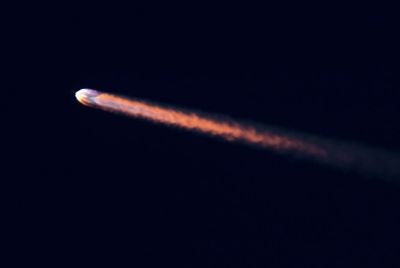
STARBASE, Texas — SpaceX's Starship rocket reached orbit for the first time on Monday and deployed 26 of the company's newest Starlink satellites, a milestone for the largest rocket ever built, though mission managers cut the flight to about three hours from a planned 10. The ship had lost an engine on the way up, and SpaceX has not said what factored into the decision to shorten the flight. The vehicle's return to Earth, the riskiest part of the mission, was still ahead at the time of writing.
Starship lifted off from SpaceX's Starbase facility on the Texas Gulf Coast at about 8:48 a.m. Eastern time, or 7:48 a.m. local, after a launch that had been scheduled for 8:15 a.m. and was pushed back within a 75-minute window, NPR and ABC News reported. ABC put liftoff at 8:50 a.m. The mission was the 14th flight of the uncrewed vehicle and the first to reach orbit; the first 13 followed deliberately suborbital paths. To reach orbital speed, about 17,500 mph, the vehicle had to fly faster and higher than on any earlier test, NPR reported.
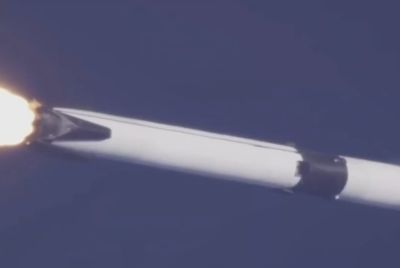
The Super Heavy booster separated and returned for a controlled splashdown in the Gulf of Mexico about seven minutes after liftoff, Space.com reported. The booster appeared to experience several engine shutdowns but nothing serious enough to affect the landing, and it fired five of its 33 engines for the final descent. CNN said it was not clear how soft the landing was, given engine issues during the return burn, and Starlust reported that unlike the previous flight, the booster relit only 31 of its 33 engines during the boostback burn.
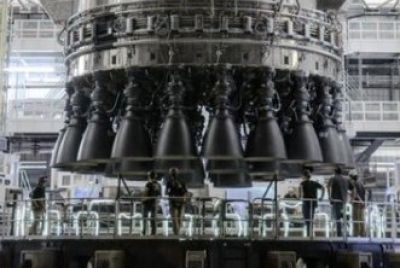
The bigger drama came on the ship. During ascent, the upper stage lost one of its six Raptor engines, which prompted SpaceX to reconsider its attempt to reach orbit, Payload reported. SpaceX spokesperson Dan Huot initially said the ship would not go to orbit, CNN reported, though that did not appear to be a final decision. "We are not giving up yet," Huot said, according to Space.com. Engineers ultimately gave the go-ahead, and about 25 minutes after liftoff, Ship 41 fired a single Raptor engine to enter orbit. "Starship is orbital," mission control confirmed, and the crowd at Starbase erupted, Space.com reported. The ship reached an altitude of about 170 miles, or 275 kilometers, according to NPR and Forbes.
Just over a half-hour into the flight, Starship began releasing its payload of 26 Starlink V3 satellites through a dispenser system over about 30 minutes, according to ABC News and Payload. It was the first time Starship has deployed operational satellites. Huot said the company had made contact with each satellite, CNN reported, marking what the network called a huge mission success. Three of the satellites carry cameras to image the ship's heat shield tiles, Space.com reported.
SpaceX then shortened the mission. At a checkpoint after deployment, controllers decided to bring the ship home early rather than complete six orbits over roughly 10 hours. "We are looking like we are going to take our first checkpoint and come back early," Huot said. "We are looking at the deorbit burn now coming right around two hours and 12 minutes into the flight ... and then we should have landing in the Pacific a little over three hours into the mission." The splashdown was planned for the northern Pacific rather than the originally targeted area off Chile, NewsNation and Space.com reported. The company did not say what factored into the decision, ABC News reported, but noted that this is its longest mission to date and that it achieved its two primary objectives of reaching orbit and putting the Starlink satellites into operation. Even at about three hours, the flight is roughly three times as long as previous tests, Starlust noted.
The deployment matters commercially. SpaceX says each Starlink V3 satellite adds about 1 terabit per second of capacity, so 26 satellites add 26 terabits per second, which the company has said is roughly 10 times the capacity of a Falcon 9 launch of the smaller V2 mini satellites. A summary of the launch coverage said one Starship can carry up to 60 V3 satellites, which the company said represents about 20 times the capacity of its earlier Falcon 9 rockets. "This one flight was like 20 Falcon 9 flights in terms of bandwidth," CNN quoted from the coverage. ABC News called the flight the first Starship mission to make money for SpaceX, noting Starlink is the company's primary revenue generator. Space.com reported that SpaceX plans to eventually deploy 100,000 upgraded Starlink V3 satellites.
The stakes extend beyond internet service. NPR said Starship is key to SpaceX's commercial success and to NASA's plans to land humans on the Moon, and CNN reported earlier that SpaceX faces intense pressure to ready Starship for a crucial NASA test flight next year. Reaching orbit allows the company to begin testing the vehicle on longer, more ambitious missions, Forbes reported.
The most dangerous stretch remains. Reentry is among the riskiest parts of any orbital mission, CNN said, because the ship must dive into the atmosphere at more than 20 times the speed of sound, and this vehicle carries heat shield upgrades that SpaceX described before the flight, including additional tile retention mechanisms, a curved tile design and the reuse of two tiles from an earlier ship. NPR reported that the mission's profile included portions that would allow Starship to abort its orbital trajectory and return to Earth safely, which appears to be how SpaceX handled the engine loss. The Federal Aviation Administration issued a license for the flight on September 26, according to CNBC as cited by Quartz, and the mission had been postponed from September 22.
Whether the ship completes its deorbit burn and splashes down as planned will determine how SpaceX characterizes the flight. A controlled splashdown would give the company data from the first orbital reentry of the current design, while a failure would not erase the success of reaching orbit and deploying the satellites. SpaceX has said it will use results from the flight to guide upcoming missions, including additional Starship flights aimed at demonstrating the reusability that the company has called central to lowering launch costs.
© Copyright 2026 IBTimes AU. All rights reserved.
- Recommended For You