

Bill Gates Calls AI Self-Regulation 'Insane,' Rebuking Trump and Warning of Bioterror and Cyberattack Risks
The Microsoft co-founder says recent advances have heightened risks involving biological threats and cybersecurity, putting him at odds with Donald Trump's lighter regulatory approach.
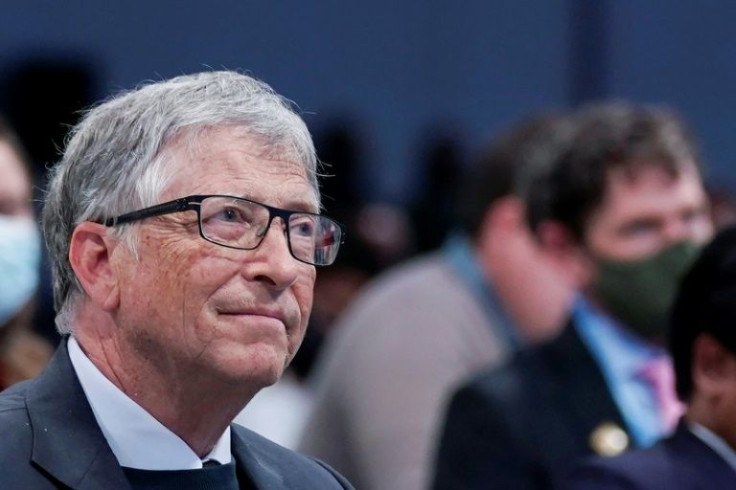
SEATTLE — Microsoft co-founder Bill Gates has warned that artificial intelligence is "the most dangerous thing that humans have ever gone near," and he rejected the idea that the AI industry can be trusted to police itself. That idea has been endorsed by President Donald Trump.
Gates made the comments on "The Ezra Klein Show," a New York Times podcast, in an interview published Tuesday. He argued that governments must impose safeguards and monitoring on AI systems to prevent catastrophic misuse.
"Part of the reason I'm speaking so loudly — as loud as I can — is that you can't rely on the industry to self-regulate here," Gates said. "I mean, it's just insane."
'The most dangerous thing'
Klein asked whether existing laws, market incentives and the threat of lawsuits against companies that release unsafe products might be enough to manage AI's risks. Gates said he could hardly believe the question was being raised.
"Well, I almost can't believe you're asking that. This is the most dangerous thing that humans have ever gone near," Gates said.
He compared AI with other industries where society sets safety rules before harm occurs, and said relying on self-regulation would be like having no Food and Drug Administration to review medicines, no agency overseeing aviation safety and no seat belt requirements for cars.
He also dismissed the idea that lawsuits could deter harm. He suggested that approach would mean waiting until someone had used AI to help kill millions of people with a biological weapon before taking action.
AI has crossed 'danger thresholds'
Gates said recent advances mean AI has already crossed important thresholds in two areas: biological threats and cybersecurity.
On cybersecurity, he pointed to AI models that can find software vulnerabilities in code that human experts had reviewed for decades without detecting the flaws. Such capabilities could be used by malicious actors to carry out crippling cyberattacks.
On biological threats, Gates said the ability to design new pathogens once required the resources of a nation state. Small groups using the latest AI tools now have that capability, he said.
Gates also warned that open-source AI models can be modified by users to switch off built-in monitoring.
A call for safeguards
Gates called for a supervisory layer of safeguards and monitoring across all AI models, designed to prevent people from using AI systems to shut down economies or kill large numbers of people. He said open-source models could remain free and customizable under such a system.
In a separate interview with NBC's "Meet the Press" on Sunday, Gates said governments should require AI developers to build monitoring into their systems, including records that would allow authorities to see how models are being used.
"AI is certainly powerful enough to drive events that cause a billion deaths," Gates said on the program. "There's never been a weapon as powerful as the combination of people with ill intent using the latest AI tools."
"No one thinks self-regulation is enough," he added.
Gates said the near-term risk of bad actors misusing AI outweighs the longer-term concern that AI systems could slip out of human control. He also noted that governments lack the technical expertise they developed around nuclear weapons, because AI was created largely in the private sector.
Clash with Trump's approach
Gates' comments put him at odds with Trump, who has favored a light-touch approach to AI regulation.
Trump recently met with leaders of major AI companies at the White House and backed an industry-led approach to AI safety, including a voluntary accord with the companies. He said there must be "a tremendous amount of self-regulation."
Trump said oversight already happens automatically through the Justice Department and the FBI, but that self-regulation is very important.
The Trump administration has argued that heavy regulation could slow American innovation and hand an advantage to China in the race to lead in AI. It has moved to roll back some AI safety measures put in place under former President Joe Biden and has opposed a patchwork of state-level AI laws.
A shift in Gates' views
The warnings mark a notable change for Gates, who has long been one of the technology's more prominent optimists. In a July 2023 essay, he wrote that "the risks of AI are real but manageable."
Microsoft, the company Gates co-founded, is one of the world's largest investors in AI and a major backer of OpenAI. Gates stepped down from Microsoft's board in 2020 to focus on philanthropy through the Gates Foundation.
In the Klein interview, Gates also discussed AI's potential to cause mass job losses and its implications for global equity. He has previously suggested ideas such as a "robot tax" to address the economic disruption from automation.
Growing debate over AI regulation
Gates joins a growing number of technology leaders, researchers and policymakers who have called for stronger government oversight of advanced AI. Some AI company executives have urged slowing development or establishing safety standards, while others argue regulation could stifle innovation.
Polls have shown broad public support for AI safety rules. A Quinnipiac University poll released this week found that 91% of Americans consider it important for the United States to set guardrails for AI systems.
With Congress yet to pass comprehensive AI legislation and the White House favoring voluntary commitments, the debate over how to regulate the fast-moving technology is likely to intensify. Gates said he intends to keep speaking out, arguing that the risks are too great to leave to the companies building the technology.
© Copyright 2026 IBTimes AU. All rights reserved.