

Elon Musk Says Delta CEO Ed Bastian Will Lose His Job After Airline Snubs Starlink for Amazon's Leo WiFi
Musk escalated his criticism after Delta selected Amazon's satellite internet service for 500 aircraft, while the airline defended the decision on cost and technology grounds.
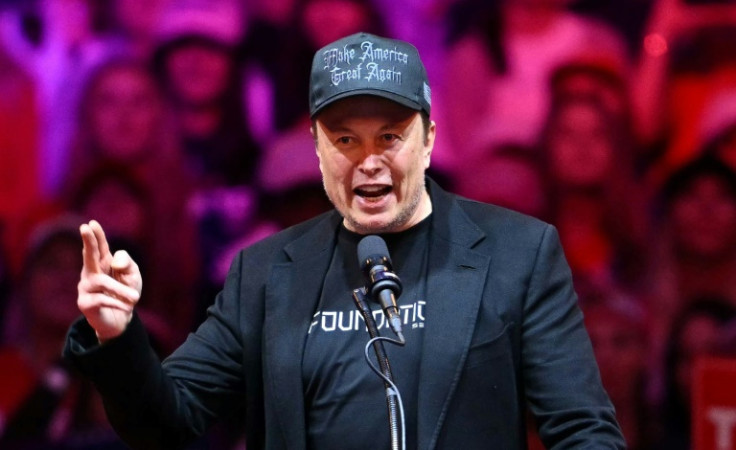
Elon Musk escalated his public feud with Delta Air Lines on Tuesday, predicting that the carrier's chief executive, Ed Bastian, "will lose his job" after the airline chose Amazon's Leo satellite internet service over SpaceX's Starlink for its in-flight Wi-Fi.
Musk, the CEO of SpaceX, made the remark on X in reply to a post by travel writer Gary Leff, who reported that Bastian had criticized Musk while explaining why Delta passed on Starlink.
"He will lose his job over this," Musk wrote.
The comment shifted Musk's criticism from Delta's business decision to the airline's top executive, as Starlink and Amazon Leo compete for lucrative airline connectivity contracts.
Reported remarks sparked the exchange
According to reports first shared by aviation insider JonNYC, Bastian told Delta employees that although the airline tested Starlink in 2022, it did not want to partner with Musk because of his personal reputation.
Leff's post quoted Bastian as saying, "If you know his reputation, it's all true what they say about him." The remarks have not been independently verified, and Delta has not publicly confirmed them.
Musk also took aim at the airline's current in-flight internet in a follow-up post.
"Best way to sandbox an AI is to put it on a Delta flight – it will have no chance of accessing the Internet!" he wrote.
Earlier Tuesday, Musk responded to a post about United Airlines' growing Starlink-equipped fleet by saying that "Delta will lose a lot of customers" because of its choice.
Delta bets on Amazon
Delta announced its agreement with Amazon on March 31. Under the multi-year deal, the airline will begin installing Amazon Leo on 500 aircraft starting in 2028, with plans to expand to hundreds more planes over time.
Leo-powered Wi-Fi will remain free for Delta SkyMiles members, consistent with the airline's current policy.
"Delta's future is global," Bastian said at the time, adding that the agreement gave the airline "the fastest and most cost-effective technology available."
Amazon CEO Andy Jassy said the deal showed the "impact and scale" of the technology, which he said would bring faster in-flight Wi-Fi to tens of millions of Delta passengers each year.
The agreement builds on a broader relationship between the two companies. Delta already uses Amazon Web Services to run reservation systems, operational tools and customer-facing apps, and the companies have said they plan to integrate AWS, Leo and other Amazon technologies, including artificial intelligence, into the passenger experience.
Bastian defended the choice
Bastian has previously defended the decision on business grounds. In an interview with Bloomberg shortly after the deal was announced, he said Amazon offered more than satellite technology alone.
"Amazon brings a lot more than just satellite technology," Bastian said, citing its retail capabilities, Amazon Prime and video gaming technologies, which he said Starlink does not have. He also pointed to Leo's improved bandwidth at a much lower price point.
In a separate interview on Fox Business, Bastian said the new service would offer speeds two to four times faster than what Delta customers currently experience, at "substantially less" cost to the airline.
Musk has offered his own explanation for why talks broke down. He has said Delta wanted to offer Starlink through its own branded portal, a condition he refused.
Rivals race ahead with Starlink
The dispute highlights a growing divide among major U.S. airlines over in-flight connectivity.
United Airlines has more than 600 Starlink-equipped aircraft and plans to install the service across its entire fleet in 2027. Alaska Airlines and other carriers have also signed on with Starlink, as have international airline groups including IAG and Lufthansa Group.
Delta, by contrast, won't begin installing Leo until 2028. Critics have said that timeline could leave the Atlanta-based airline years behind rivals in offering fast, low-latency satellite Wi-Fi.
JetBlue is also an Amazon Leo customer and is expected to equip its first Airbus A321 with the service in 2027.
A gap in satellites
The competition also reflects a significant difference in scale between the two satellite networks. As of July, Amazon had about 400 Leo satellites in orbit, compared with more than 10,000 Starlink satellites.
Amazon's service, formerly known as Project Kuiper, was renamed Leo in 2025. It has faced delays and is not expected to enter beta testing until 2027.
SpaceX, meanwhile, continues to expand Starlink's capacity. Days before Musk's latest comments, the company's Starship Flight 14 deployed 26 next-generation Starlink V3 satellites, the first to reach operational orbit.
Stakes for SpaceX and Amazon
The feud comes as airline Wi-Fi becomes a key battleground in the broader rivalry between Musk and Amazon founder Jeff Bezos, whose companies are competing across satellite internet and space launch.
Starlink is a major revenue driver for SpaceX, which is preparing for a closely watched initial public offering. Every major airline contract won or lost carries weight as investors assess Starlink's competitive position.
For Amazon, the Delta deal was a major endorsement of Leo's aviation ambitions and puts pressure on the company to deliver the service on time.
Customer reaction
Musk's posts drew strong reactions online. Some frequent flyers sided with him on X, with several saying they would switch to Starlink-equipped airlines such as United.
Others defended Delta, noting that the airline's Wi-Fi remains free for loyalty members and that Leo has yet to be tested at scale.
Bastian has led Delta as CEO since 2016. There is no indication that his position is in jeopardy, and Musk did not explain the basis for his prediction.
The real test of Delta's decision will likely come when passengers begin using Leo at cruising altitude in 2028. Until then, the airline faces competitors that are already offering Starlink Wi-Fi on hundreds of aircraft, and a SpaceX chief executive who appears unwilling to let the matter drop.
© Copyright 2026 IBTimes AU. All rights reserved.